
Related Product
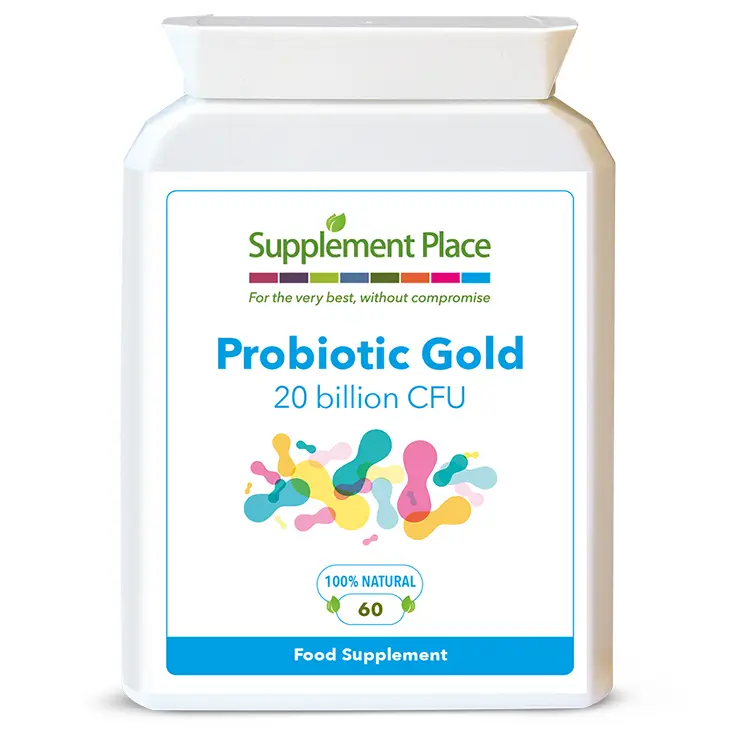 Probiotic Gold – 20 billion CFU
Wondering whether the bacteria in your gut could genuinely help you fight off colds and infections? Let’s take a look at what the science says.
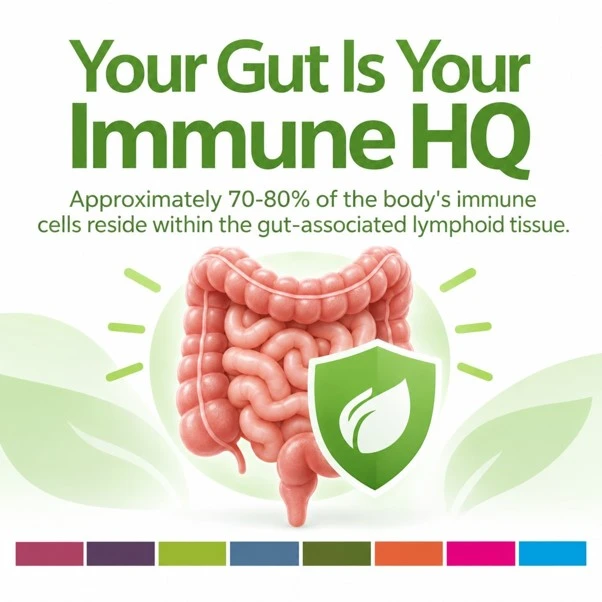
Probiotics are live microorganisms which, when taken regularly, may support immune function by strengthening the gut lining, calming inflammation, and helping your body produce protective antibodies. According to research on the gut-immune axis and microbiome health, approximately 70-80% of the body’s immune cells reside within the gut-associated lymphoid tissue. That single fact may reassure you and change how you think about gut health entirely.
Most people reach for vitamin C at the first sign of a sniffle. And that’s fair enough. But the research on probiotics and immune health is quietly building into something worth paying attention to. Not as a magic fix, but as a seriously useful piece of the puzzle.
What Are Probiotics and How Do They Work?
Probiotics are live microorganisms, typically bacteria or yeasts, which provide health benefits when consumed in adequate amounts. They work by colonising the gut, competing with harmful bacteria, and communicating directly with your immune cells through the gut lining.
The most studied probiotic species belong to two main families: Lactobacillus and Bifidobacterium. You’ll find these good bacteria in fermented foods like yogurt, kefir, kimchi, sauerkraut, miso, and kombucha. You can also get them from a probiotic supplement, which typically contains one or more specific strains in a measured dose.
But probiotics don’t work in isolation. They interact with the existing community of trillions of microbes already living in your gut, collectively known as the gut microbiome. When that community is balanced and diverse, your immune system tends to work more efficiently. When it’s disrupted – a state known as dysbiosis – your immune function can suffer.
That disruption can happen more easily than you’d think. A course of antibiotics, a bout of food poisoning, poor diet, chronic stress, or even too little sleep can all shift the balance of your gut microbiome. Probiotics, whether from food or from supplements, may help restore that balance.
The Gut-Immune Connection
The gut-immune axis is the direct line of communication between your digestive tract and your immune defences, and it explains why gut health and immune health are so closely linked.
That figure of 70-80% of immune cells which live in your gut isn’t just a striking statistic. It tells you that the gut is your body’s primary immune organ. Gut-associated lymphoid tissue lines your intestinal wall and acts as a constant checkpoint, scanning everything passing through for potential threats.
When your gut microbiome is healthy and diverse, it helps train and regulate this immune checkpoint. Beneficial bacteria signal to immune cells to stay calm around harmless substances like food, while remaining alert to genuine pathogens. Dysbiosis (imbalanced gut bacteria) can confuse these signals. The result is an immune system that may become either sluggish or, in some cases, overactive.
This is why what happens in your gut matters so much beyond digestion. If you’re interested in how probiotics support digestive health more broadly, that connection between gut balance and overall wellbeing runs through nearly every system in your body.
How Probiotics Help the Immune System
Probiotics support immune function through several distinct mechanisms and understanding them helps explain why strain choice matters so much.
Strengthening the Gut Barrier
One of the most important things probiotics do is help maintain the physical wall between your gut contents and your bloodstream. Research published in a peer-reviewed study found that probiotics modulate gut barrier function by enhancing tight junctions between epithelial (tract lining) cells, according to this research on gut barrier integrity.
Think of tight junctions as the mortar between bricks in a wall. When they’re strong, harmful particles stay where they belong. When they weaken, the result is often called a ‘leaky gut,’ and it can trigger widespread inflammation.
Producing Short-Chain Fatty Acids
When beneficial bacteria ferment dietary fibre in your colon, they produce compounds called short-chain fatty acids. These aren’t waste products. Research on short-chain fatty acids and immunity shows they play important roles in immune regulation, helping to keep inflammation in check and supporting the cells that line your gut. A diet rich in plant fibre feeds this process, which is why what you eat alongside your probiotics matters just as much as the probiotics themselves.
Boosting Protective Antibodies
Probiotics can also stimulate the production of secretory IgA, a type of antibody that lines your gut and respiratory tract. This antibody acts as a first line of defence, binding to pathogens before they can attach to your cells. According to research, this overview of probiotic immune modulation confirms that probiotics can enhance sIgA production, (your primary immunity defence mechanism), improving pathogen clearance in the gut. It is a quiet, unglamorous mechanism, but it makes a real practical difference.
Best Probiotic Strains for Immune Support
Not all probiotics offer the same immune benefits, and the evidence strongly favours specific, well-researched strains over generic blends.
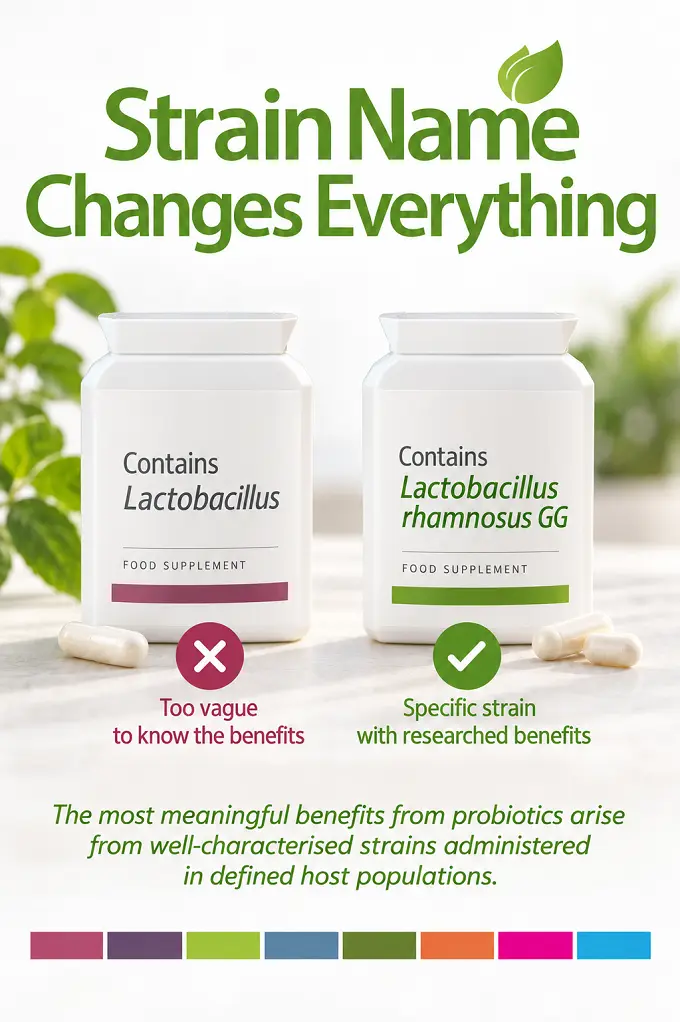
Research from Frontiers in Immunology concluded that the most meaningful benefits from probiotics arise from well-characterised strains administered in defined host populations, as noted in this review of probiotic strain specificity and immune outcomes. In plain terms: the strain name on the label matters. ‘Contains Lactobacillus’ tells you very little. ‘Contains Lactobacillus rhamnosus GG’ tells you a great deal more.
The strains with the strongest evidence for immune support include:
- Lactobacillus rhamnosus GG – one of the most studied strains for gut health and immune function in both adults and children
- Lactobacillus acidophilus – associated with enhanced immune cell activity and may help reduce inflammation
- Bifidobacterium longum – linked to reduced upper respiratory tract infection duration in several studies
- Bifidobacterium bifidum – supports gut barrier integrity and IgA production
- Lactobacillus plantarum – shows promise for anti-inflammatory effects via short-chain fatty acid production
Saccharomyces boulardii, a beneficial yeast rather than a bacterium, is also worth mentioning. It’s particularly well-regarded for restoring gut microbiome balance after antibiotics and may support immune recovery during that period.
If you’re also interested in other plant-based approaches, our article on plant extracts that support immune health covers some useful complementary options.
Probiotic Foods That Support Immunity
Fermented foods are the most natural way to introduce beneficial bacteria into your gut, and for many people they’re a perfectly good starting point before considering a probiotic supplement.
You don’t need to overhaul your entire diet. Adding one or two fermented foods regularly is a reasonable, practical approach. Good options include:
- Live yogurt – look for ‘live active cultures’ on the label – a convenient daily source of Lactobacillus and Bifidobacterium strains
- Kefir – a fermented milk drink with a broader range of strains than most yogurts, and often better tolerated by people with mild lactose sensitivity
- Kimchi and sauerkraut – fermented vegetables rich in Lactobacillus strains; also high in fibre, which feeds your existing gut bacteria
- Miso – a fermented soy paste used in soups and dressings; contains live microorganisms alongside useful minerals
- Kombucha – a fermented tea drink; the probiotic content varies considerably between brands, so check the label
A word of caution about fermented foods: the bacterial counts are generally lower and more variable than in a targeted probiotic supplement. If you have a specific health goal in mind, or you’re rebuilding your gut microbiome after illness or antibiotics, a supplement with a guaranteed CFU count and named strains will give you more control.
Prebiotics matter here too. These are types of dietary fibre, found in foods like garlic, onions, leeks, bananas, oats, and artichokes, that feed your beneficial bacteria. Without adequate prebiotics, even a good probiotic supplement has less to work with. Eating a varied diet with plenty of plant foods is one of the simplest things you can do for your gut microbiome.
Probiotics and Respiratory Infections: What the Evidence Shows
Probiotics may modestly reduce the duration of common upper respiratory tract infections, such as colds and flu-like illness, according to research on probiotics and respiratory infection outcomes.
That’s a useful benefit, but it’s worth being precise about what the evidence does and doesn’t say.
Reducing duration is not the same as preventing infection altogether. The honest picture is more nuanced than many supplement labels suggest. For instance, a randomised, triple-blind, placebo-controlled trial found that probiotics did not increase influenza antibody responses in adults, as reported in this Frontiers in Immunology trial on probiotics and influenza immunity. And separately, research has found that routine probiotic supplementation does not significantly reduce respiratory infection risk in infants, as shown in this study on probiotic use in infants and respiratory outcomes.
None of this means probiotics are without value. It means they’re not a universal shield, and the effect depends on the strain, the dose, the individual, and the specific infection. The most sensible way to think about them is as one tool among several, alongside a balanced diet, adequate sleep, vitamin D, and regular movement.
Speaking of vitamin D, it works closely alongside gut health in regulating immune responses. Our article on the benefits of vitamin D3 and K2 covers that connection if you’d like to read further.
Are Probiotics Safe? Side Effects and Precautions
Probiotics are generally safe for healthy adults, and serious side effects are rare. That said, a balanced picture is always more useful than a blanket reassurance.
The most commonly reported side effects when starting a probiotic supplement are mild and temporary: bloating, gas, and loose stools in the first few days. These usually settle as your gut microbiome adjusts. Starting with a lower dose and increasing gradually can help minimise this.
Where more care is needed:
- Immunocompromised individuals – people with weakened immune systems, including those on immunosuppressant medication or undergoing chemotherapy, should speak to their doctor before taking probiotics
- Premature infants and critically ill patients – probiotic use in these groups carries a higher risk profile and requires medical supervision
- People with central venous catheters – there is a small but documented risk of bacterial translocation in this group
- Pregnancy and breastfeeding – probiotics are generally considered low-risk in pregnancy, but it’s sensible to check with your midwife or GP before starting a new supplement
If you’re taking prescription medication, particularly immunosuppressants or antifungal drugs, it’s always worth mentioning a new probiotic supplement to your pharmacist. They can flag any interactions quickly and easily.
How to Choose and Use Probiotics for Immune Health
Choosing an effective probiotic for immune support comes down to four things: strain specificity, CFU count, quality assurance, and timing.
What to Look for on the Label
A good probiotic supplement should name the strains it contains down to the strain level, not just the genus and species. ‘Lactobacillus acidophilus NCFM’ is specific and researched. ‘Lactobacillus acidophilus’ alone is much harder to evaluate. Look for a CFU (colony forming unit) count that is guaranteed at the end of shelf life, not just at the time of manufacture. Many products lose potency before the expiry date if stored poorly.
Multi-strain formulas are not automatically better than single-strain products. More strains mean more complexity, not more benefit. Choose based on the evidence for specific strains rather than the number listed.
When to Take Probiotics
Timing matters more than most labels acknowledge. After a course of antibiotics, beneficial bacteria are depleted and dysbiosis is likely. Starting a probiotic supplement immediately after antibiotic treatment, and continuing for at least two weeks after finishing, may help restore gut microbiome balance and support immune recovery.
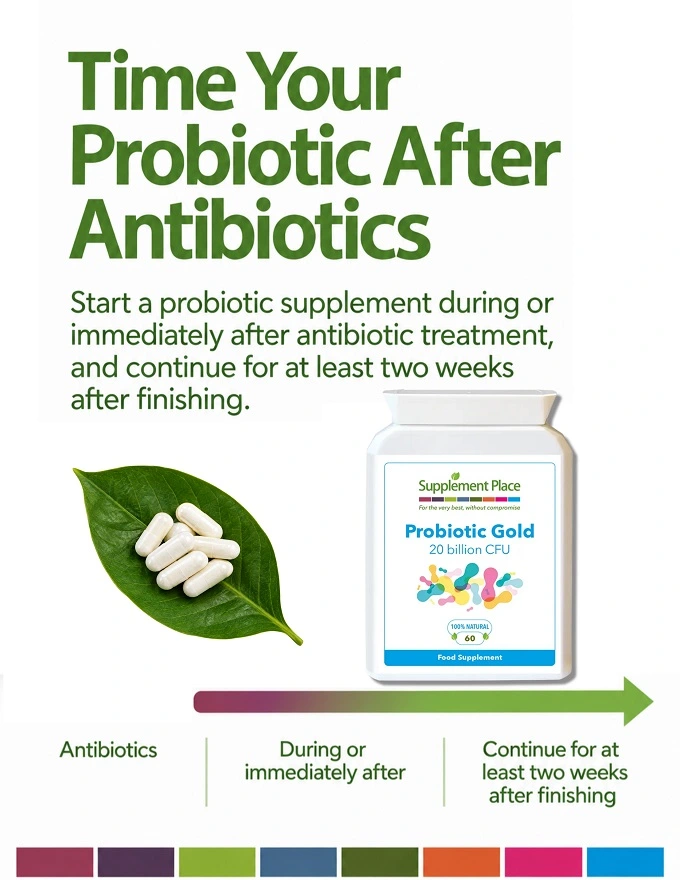
For general daily use, consistency matters more than timing within the day. Some evidence suggests taking probiotics with or just before a meal may improve survival through stomach acid, but the difference is modest for most well-encapsulated supplements.
Supporting Your Probiotics with the Right Diet
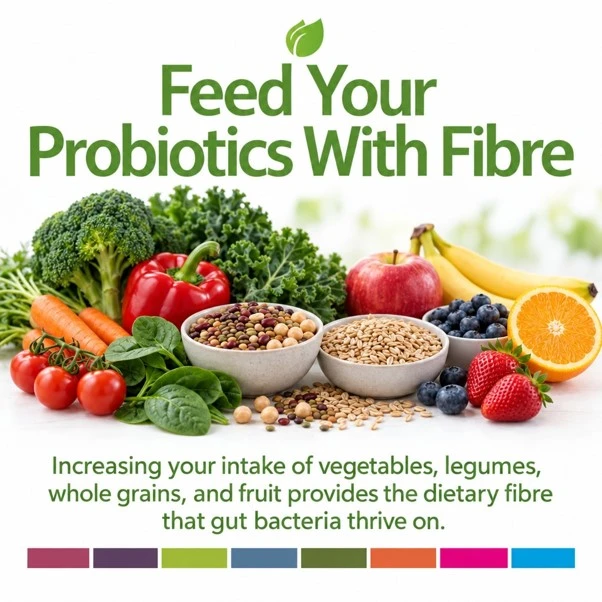
Prebiotics feed your beneficial bacteria and are as important as the probiotics themselves. Increasing your intake of vegetables, legumes, whole grains, and fruit provides the dietary fibre that gut bacteria thrive on. Anti-inflammatory nutrients also support the broader immune environment. Omega-3 fatty acids, for instance, have their own role in reducing gut inflammation. Our article on the benefits of omega-3 explores that in more detail.
Curcumin, the active compound in turmeric, may also support the gut-immune axis by reducing inflammation in the gut lining. If you’re building a broader immune health routine, our guide to curcumin’s health benefits is a useful companion read.
Probiotics work best as part of a wider approach to gut health rather than as a standalone fix. A varied, fibre-rich diet, sensible use of antibiotics, good sleep, and managing stress all make a meaningful difference to your gut microbiome and, by extension, your immune system. A well-chosen probiotic supplement can add to that foundation. It won’t replace it.
Related Supplements
- Probiotic Gold
- Baobab Powder
- Pure Inulin Powder
- Vitamin D3 (Wholefood)
- Curcumin & Black Pepper Extract
Our Promise
When it comes to keeping you informed on health and nutrition, we’re here for you and aim to help where we can. If you would like to discuss any aspect of using natural supplements, or would like help choosing a product, the team at Supplement Place is always happy to point you in the right direction based on your specific situation. Please feel free to contact us on 01297 553932.